The Catherine Series
French novelist Juliette Benzoni’s Catherine series is a sweeping seven-volume saga of love, intrigue, and adventure set against the turmoil of 15th-century France during the Hundred Years’ War. Beginning in medieval Paris, the story follows Catherine Legoix, a beautiful and courageous young woman whose extraordinary journey takes her from humble beginnings into the courts of nobles and kings, through political intrigue, dangerous rivalries, and passionate romance. Rich in historical detail, the novels transport readers across medieval France and beyond, weaving intimate human drama into the grand tapestry of European history. Piège pour Catherine (A Trap for Catherine), the sixth installment, was first published in France in 1973, followed by British and American editions. In it, Catherine must defend her home against a brutal siege while confronting betrayal and a threat to her marriage. Like the series as a whole, it portrays a resourceful woman navigating a world shaped by war, power, and the competing demands of love and duty.
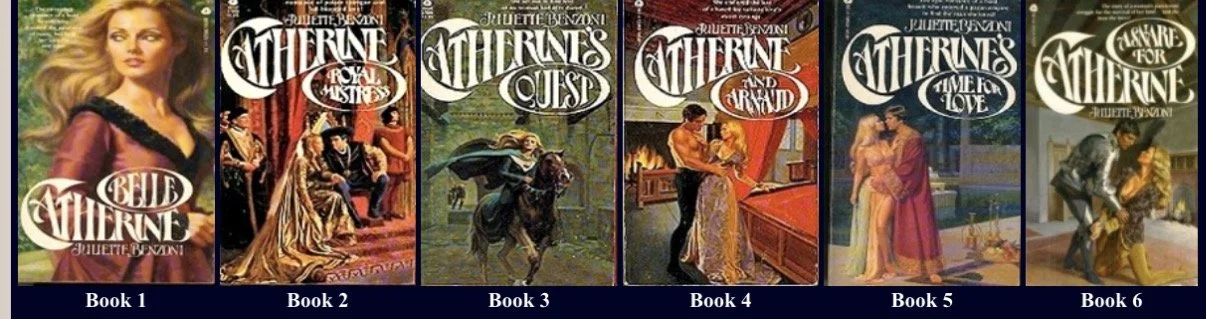
Cover Art Across time and Place
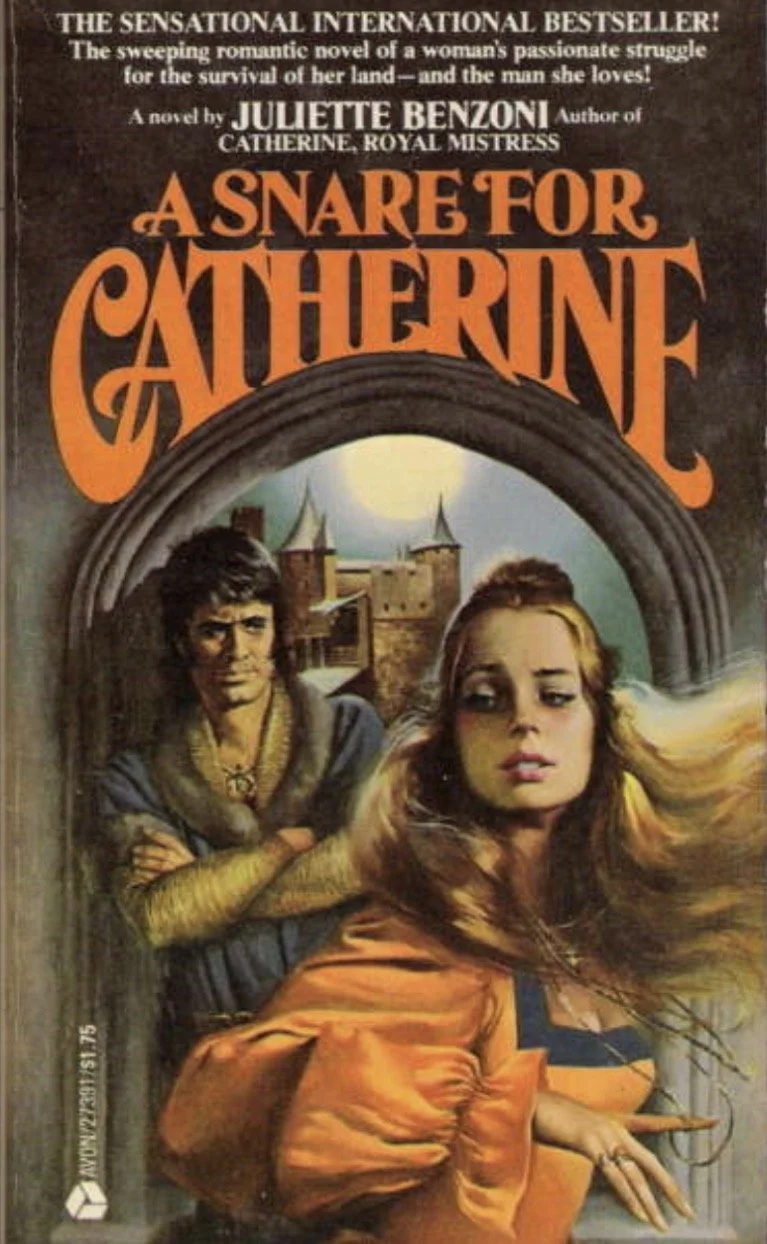
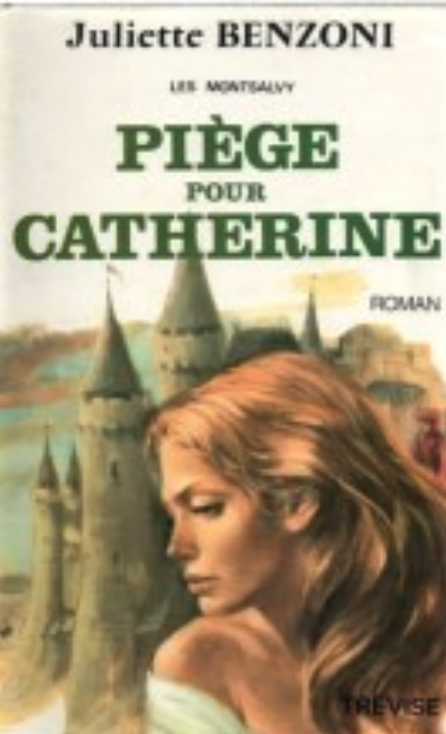
Published in 31 countries, Juliette Benzoni’s Catherine series inspired an extraordinary variety of cover art, with publishers around the world offering their own visual interpretations of the same sweeping historical romance. Some emphasized passion and sensuality, others danger, intrigue, or Catherine’s strength and independence. The differences in composition, costume, color, and artistic style reveal not only changing tastes but also the ways publishers sought to appeal to their particular audiences.
The six covers shown here offer a fascinating comparison, from the richly atmospheric, hand-painted illustrations of the 1970s to the digitally created artwork of the Kindle edition available today. The latter offers a polished, idealized vision of medieval romance, while the earlier paintings often convey a more intimate sense of human drama and emotional tension. Together, they demonstrate how differently a single story can be imagined, and how the art of book cover illustration has evolved.
For more about Juliette Benzoni and this series: https://catherinedemontsalvy.ch/English/catherine-one-love-is-enough.htm
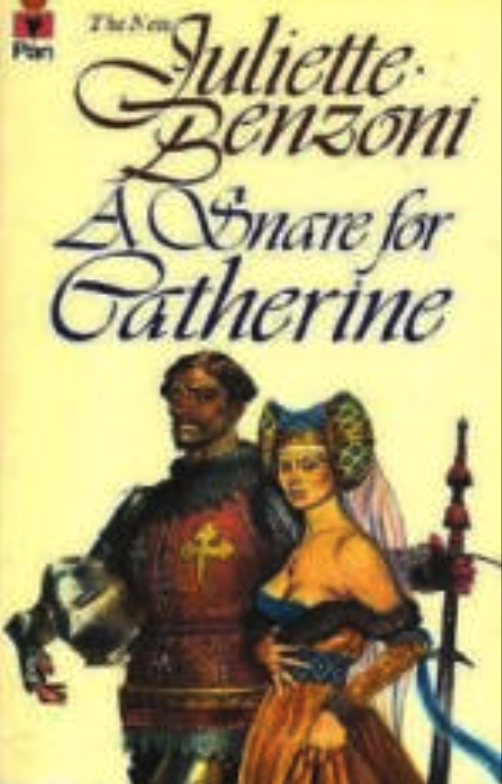
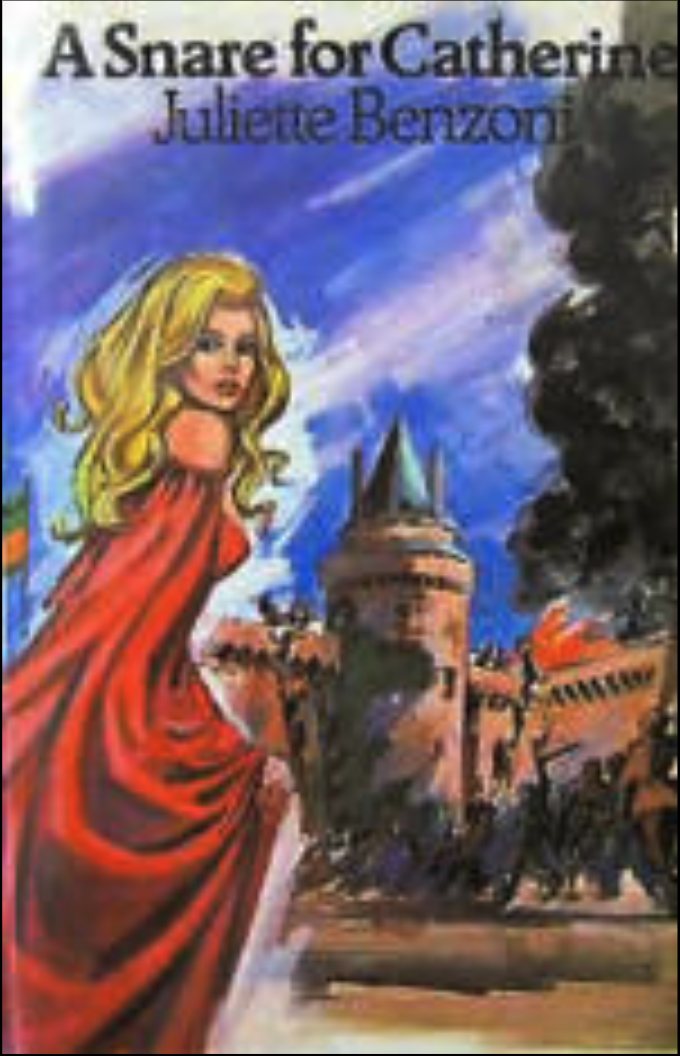
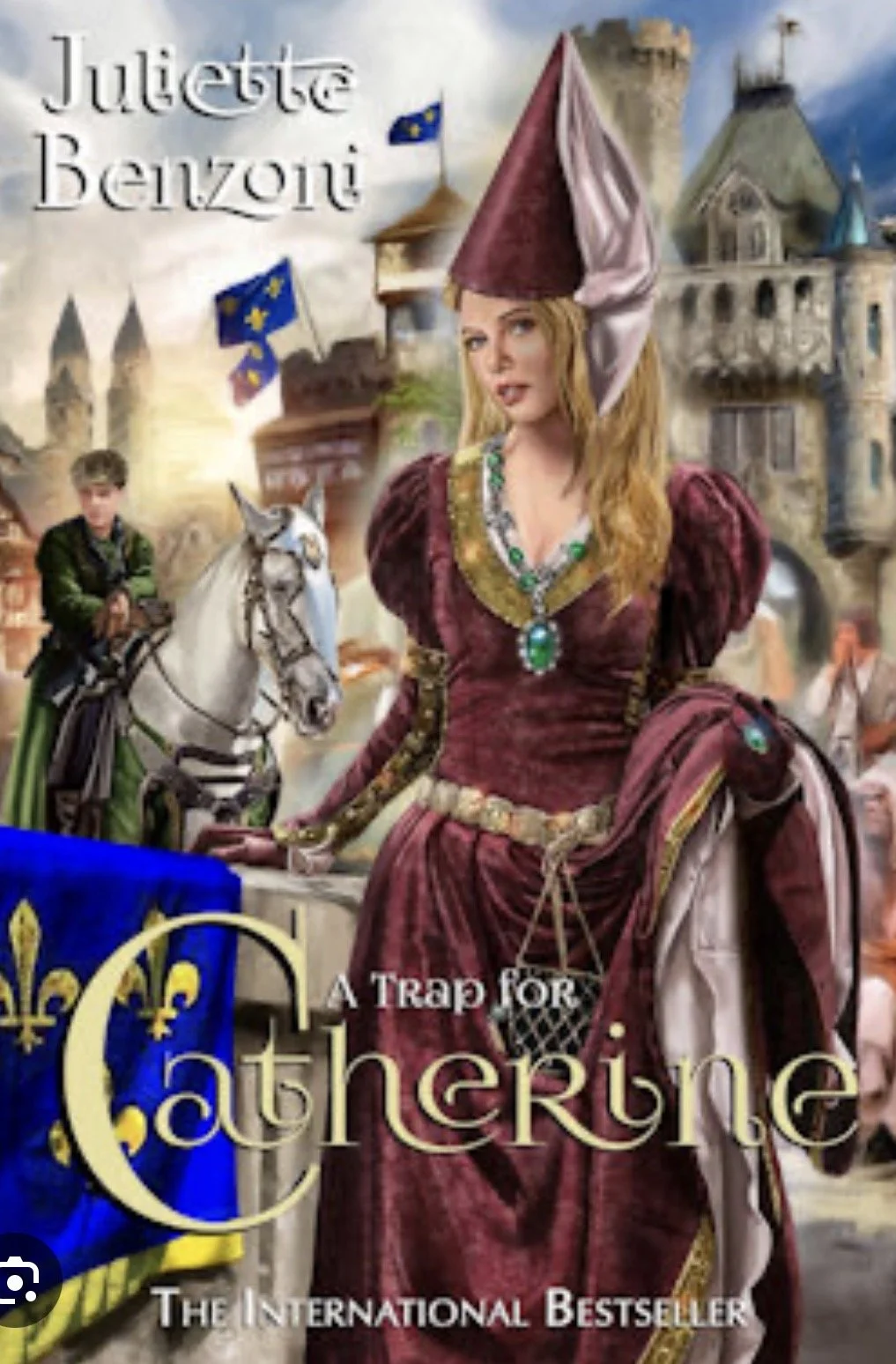
Elaine’s covers
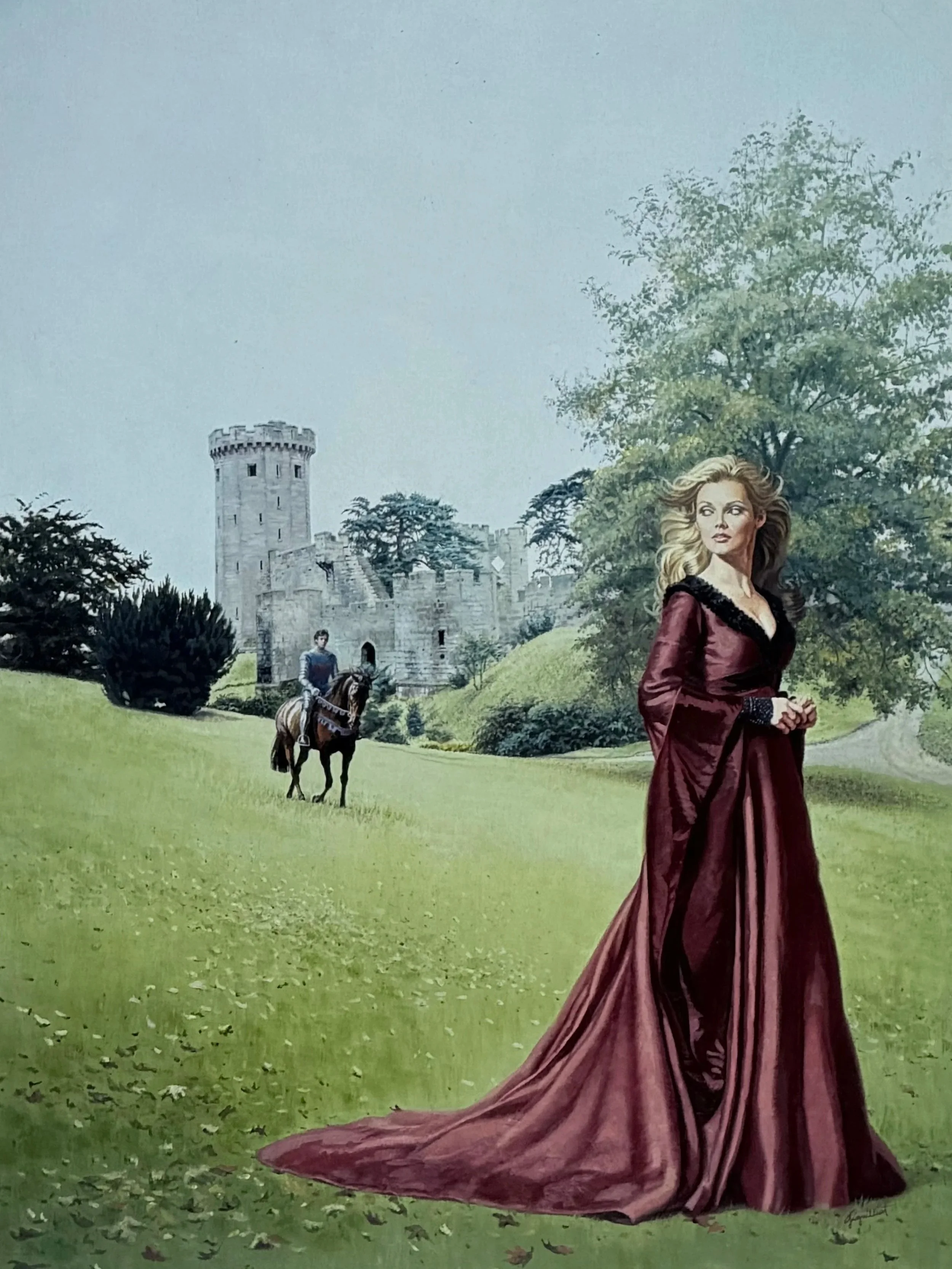

Details Worth Noticing: The Evolution of Catherine
Across Elaine Gignilliat’s six covers for Juliette Benzoni’s Catherine series, we see not only the evolution of a heroine, but also an artist’s increasingly sophisticated approach to storytelling.
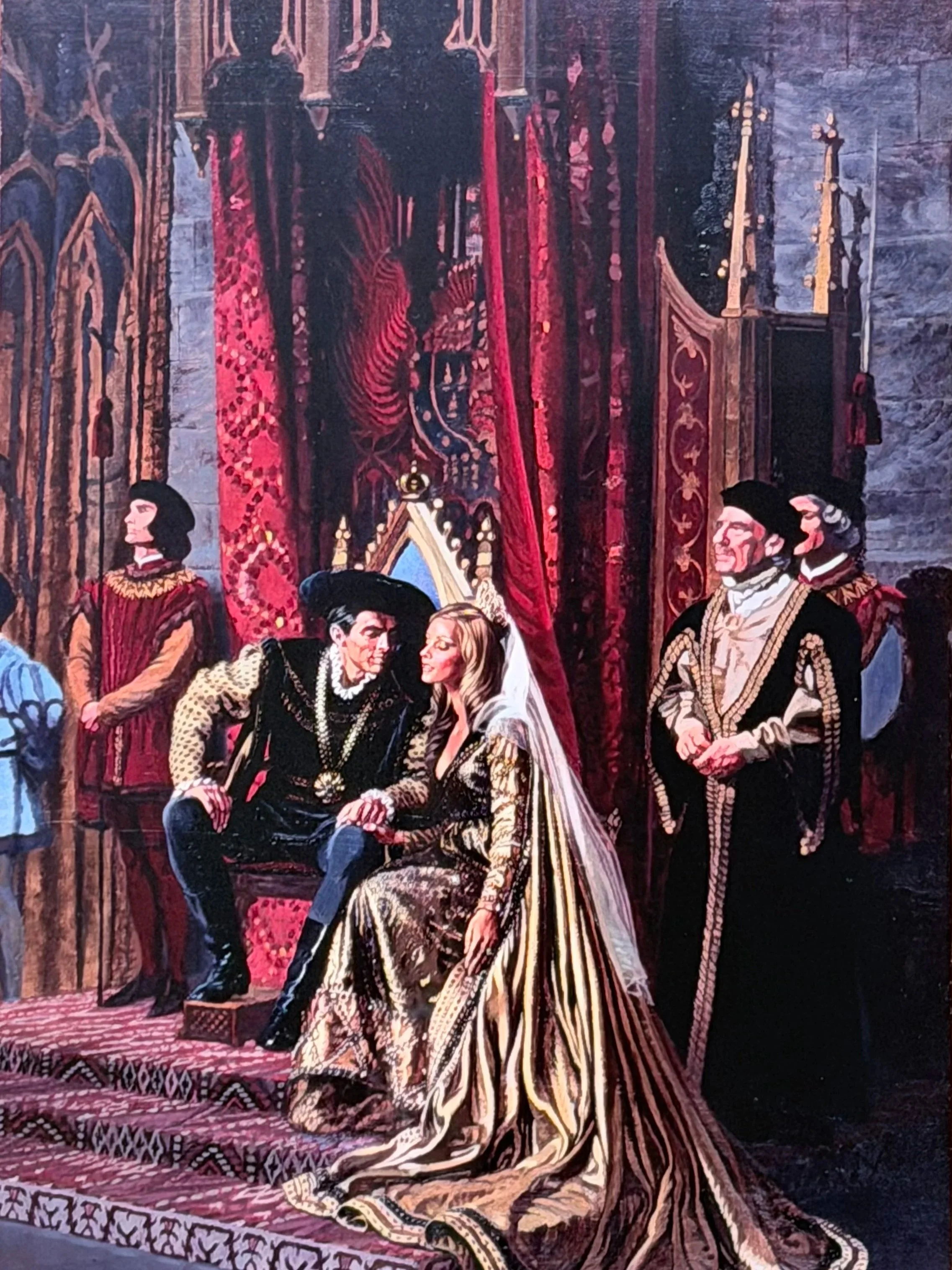
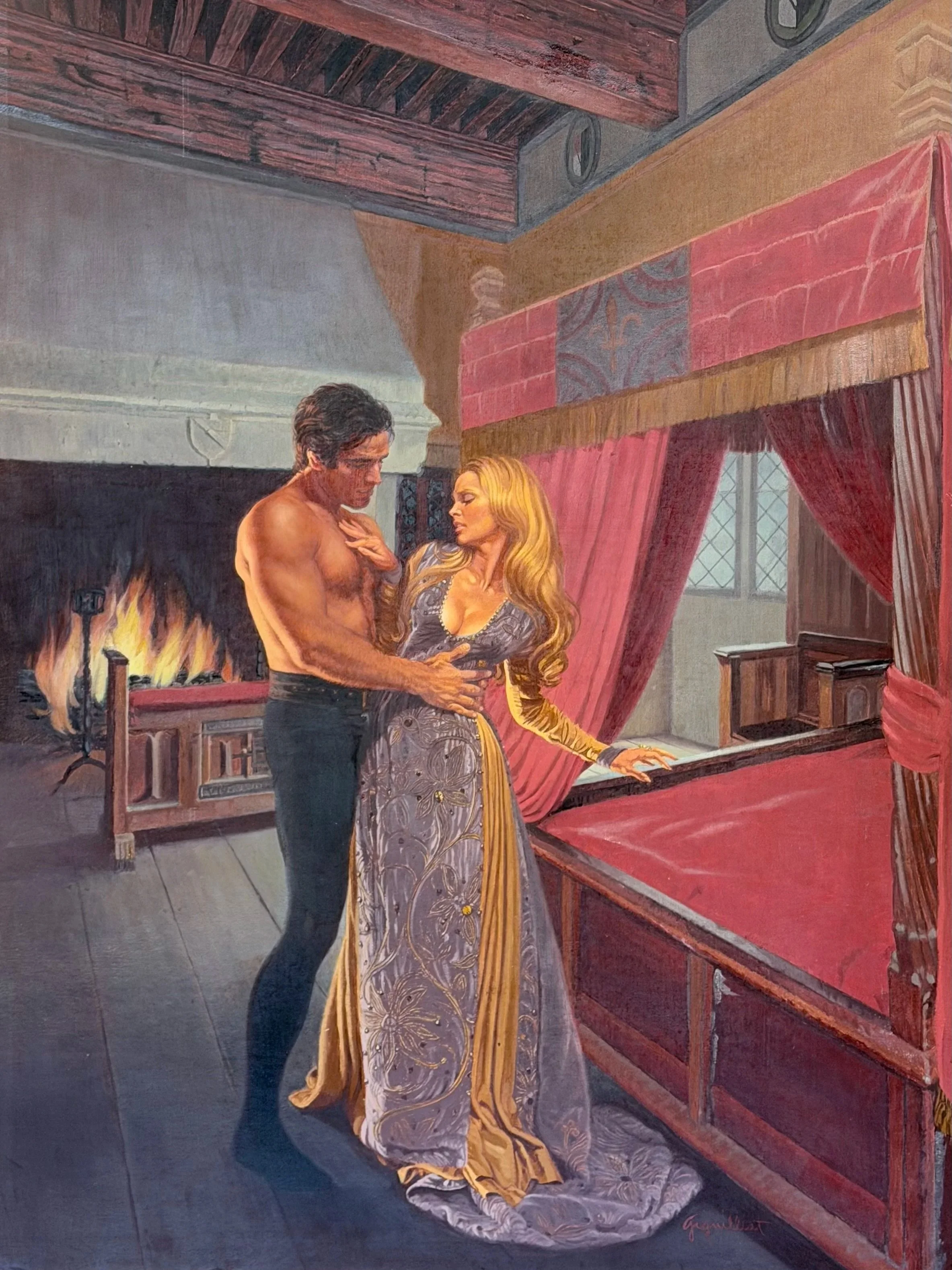
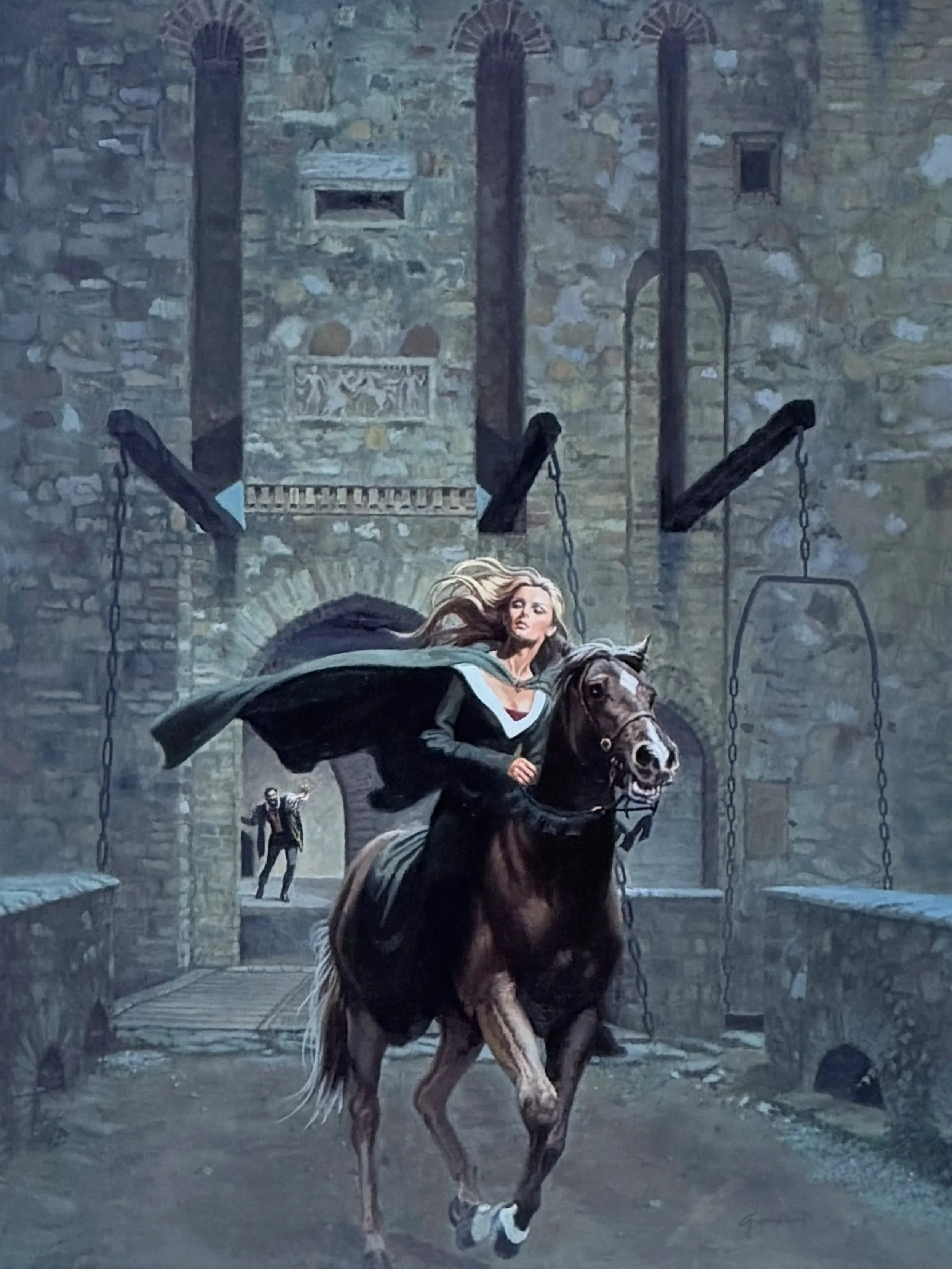
Look closely at the settings. From medieval architecture and castle interiors to elaborate costumes, jewelry, and furnishings, Elaine devoted extraordinary attention to establishing a convincing historical world. These are not merely decorative backgrounds. They give each scene a sense of place, atmosphere, and authenticity, often through details barely discernible on the printed paperback.
Notice how Catherine’s portrayal evolves. In the earlier covers, Catherine stands as the central figure, her beauty, costume, expression, and surroundings suggesting a woman of independence, mystery, and determination. As the series progresses, Elaine increasingly explores Catherine through her relationships with others. The compositions become more intimate, the gestures more consequential, and the emotional stakes more immediate.
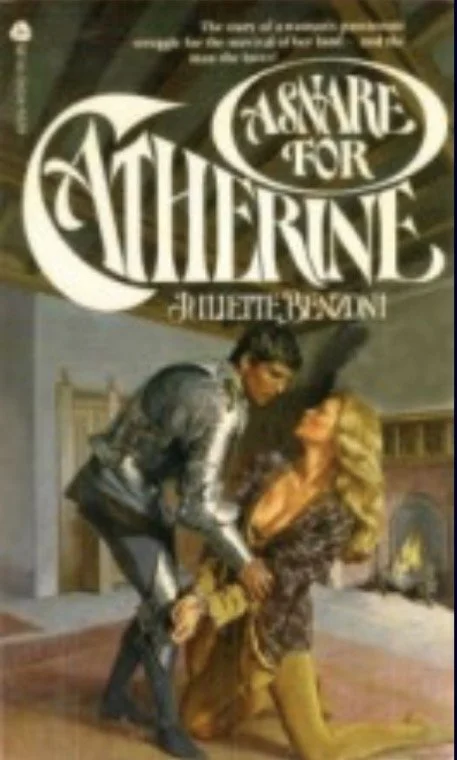
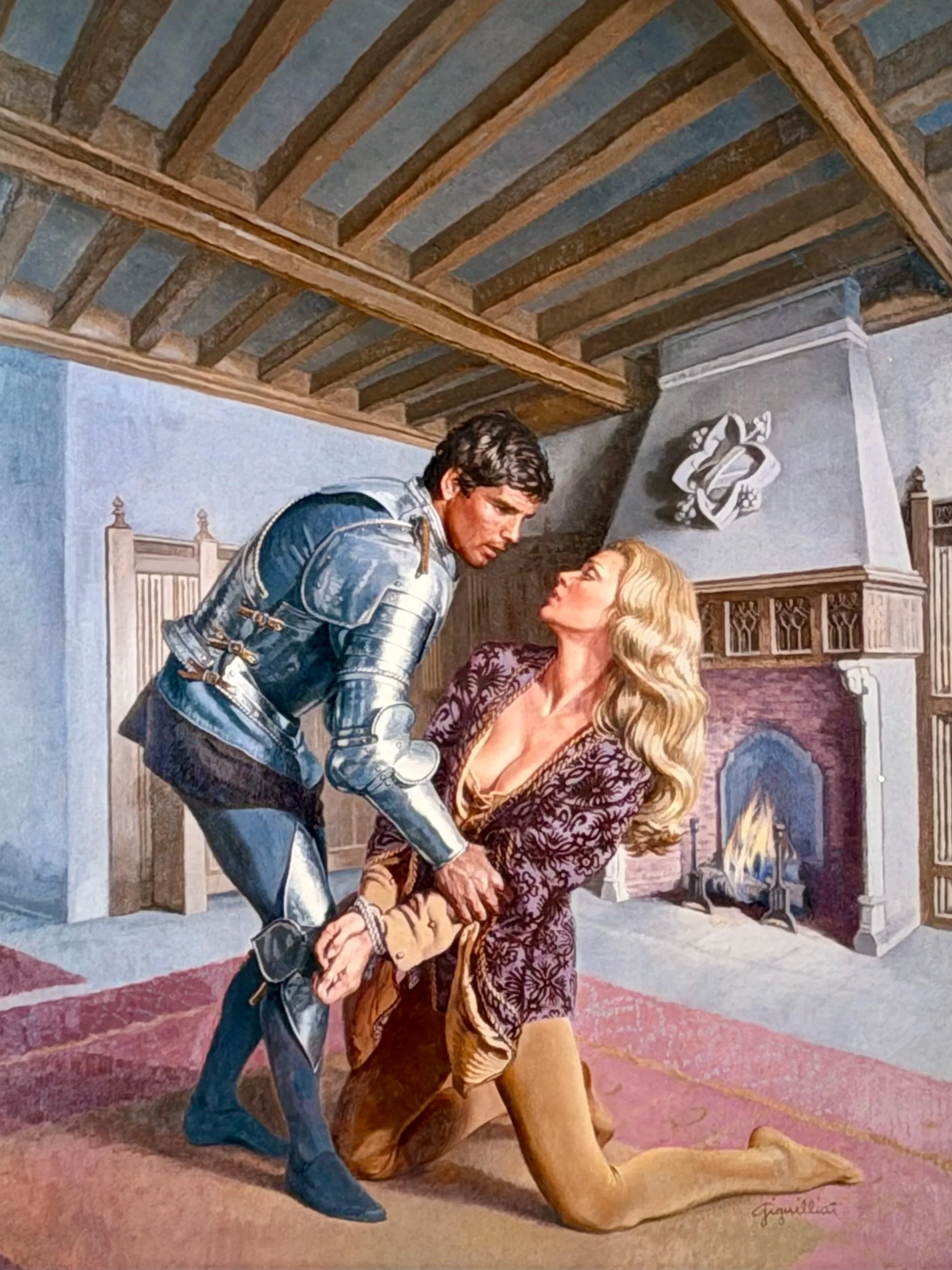
And then there is the growing tension. What begins with a solitary heroine gradually becomes an exploration of attraction, vulnerability, power, and desire. Elaine uses the language of bodies—the angle of a head, the distance between two faces, a hand placed at the waist, a woman’s response to a man’s approach—to suggest entire conversations without a word being spoken. By A Snare for Catherine, the tension is almost palpable. The armored man bends toward Catherine as she kneels before him, their gazes locked in a moment that seems suspended between resistance and surrender.
Viewed together, these six paintings reveal Elaine’s gift for capturing not simply what is happening, but what might happen next. Each cover invites the reader into a story already unfolding, with all its emotional complexity, romantic possibilities, and unanswered questions.Details Worth Noticing
The drama is unmistakable, but look beyond the figures to the extraordinary attention Elaine lavished on the setting. The massive exposed ceiling beams, intricately carved fireplace, ironwork, and architectural detailing establish a convincing medieval interior. Notice, too, the contrast between his cold, rigid armor and her soft, flowing fabrics, and the way their opposing postures capture a moment of confrontation, vulnerability, and unresolved tension. Even the fire burning quietly in the background seems to echo the emotions in the foreground.