Devlyn
Alysse Alenne
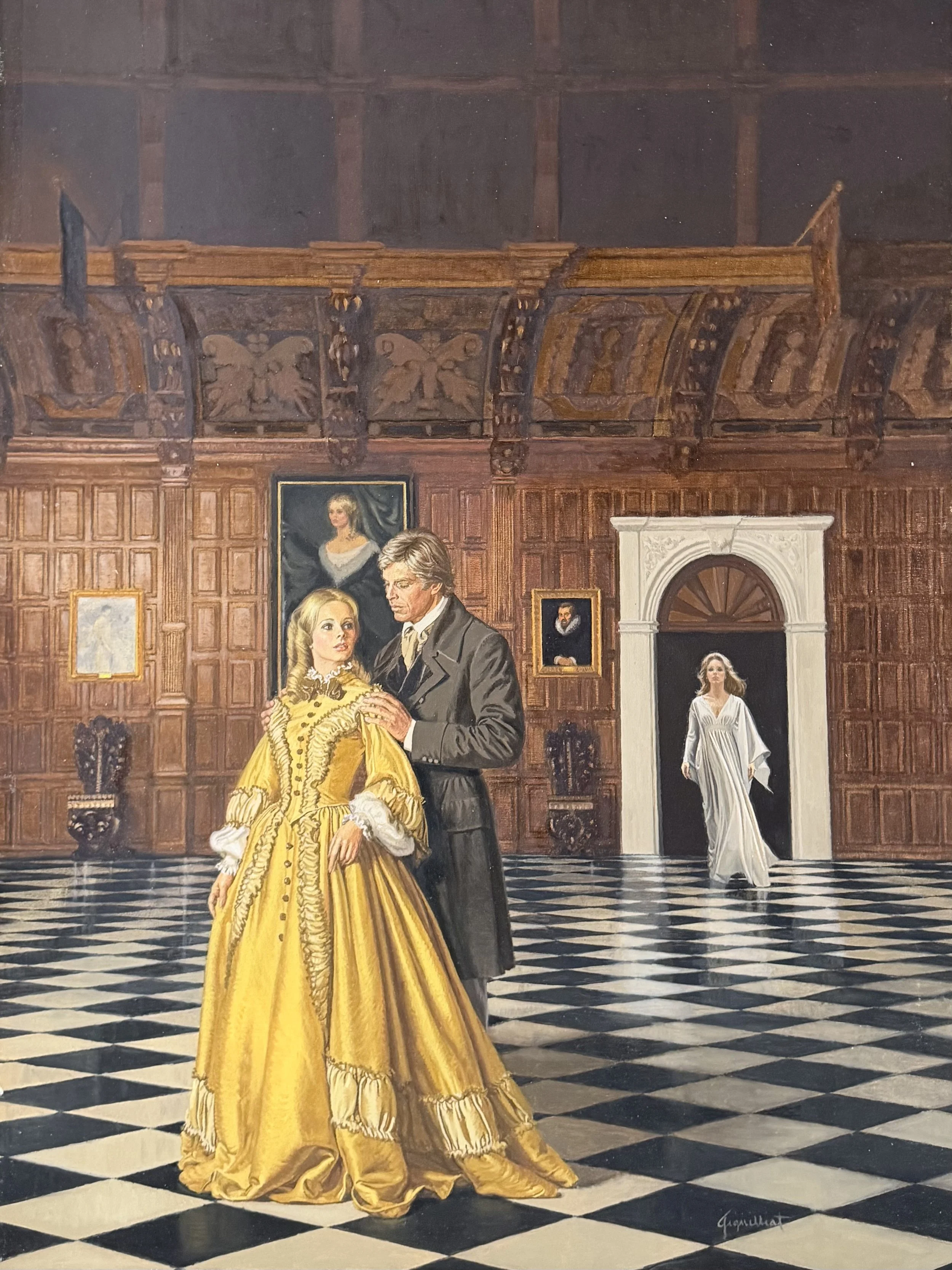
The Story
Thea Furnivall - the orphan of a clergyman, she was found by the elegant Lord Devlyn sewing in the window of a common shop, living in virtual poverty Yet she could quote poetry in three languages and she maintained a self assurance that set her quite apart from other women of her class.
Iantha Fitzjoyce - daughter-in-law of Lord Devlyn, lady of a Regency manor, she appeared to be truly regal with her stunning beauty and proud bearing. But what were her origins... might they be as lowly as Thea's own? And with her wild spurts of temper—which more than verged on violence—could she maintain her power over the men of Devlyn Manor?
Lord Devlyn - noble, rich, handsome, seemingly remote, yet he was brash enough to remove Thea to his estate without a moment's hesitation, merely because she resembled someone he'd loved. He was said to have caused the death of more than one beautiful woman, and some called him a woman hater. The inscrutable Lord Devlyn stubbornly hid a secret that would reveal the deepest, most emboldened passion.
A Detail Worth Noticing
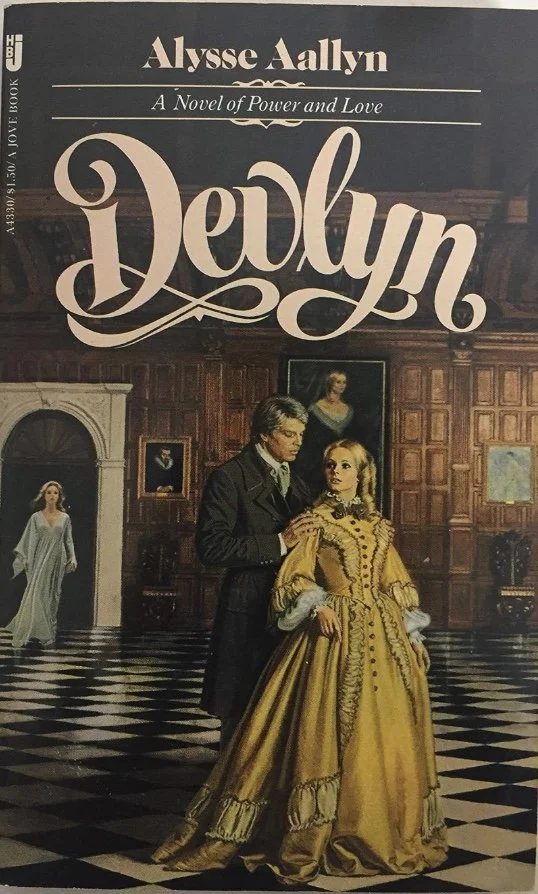
The extraordinary architectural detail and dramatic perspective in Devlyn (1977) transform a seemingly simple encounter into a scene filled with intrigue and psychological tension. The elaborate wood paneling, portraits, soaring ceiling, and meticulously rendered checkerboard floor establish a grand setting, while the relationships among the three figures suggest a story far more complex than the central couple alone.
Particularly striking is the woman in white, framed in the distant doorway—small in scale, yet impossible to overlook. Her presence introduces an entirely new layer of mystery.
Elaine's Artistry
Painted in 1977, just three years after Elaine began illustrating book covers, Devlyn demonstrates a remarkable leap in technical mastery and artistic ambition.
The sophisticated use of perspective, meticulous architectural detail, and richly rendered period costumes reveal an artist with an extraordinary eye for authenticity and composition. The dramatic checkerboard floor draws the viewer into the scene, while the positioning, gestures, and expressions of the three figures establish a complex emotional narrative without a single word.
What is perhaps most remarkable is the sheer ambition of the painting. Much of its intricate detail would be lost when reproduced at paperback size, yet Elaine approached the original canvas as a complete work of art, creating a world far richer than the demands of commercial illustration required.