The Far Memory Series
by Joan Grant
The Far Memory Series Backstory
English born writer Joan Marshall Grant Kelsey (1907-1989) considered herself a reincarnationist, and claimed to have lived at least forty times before her current existence. She used the term "far memory" to describe her ability to remember previous lives and so her novels, in essence, were not novels at all but remembered realities, or as she preferred to call them, "previous life autobiographies." (source: The Paperback Pallette)
Elaine brought her own deep fascination with ancient Egypt to the Far Memory series, published by Avon in paperback in 1977. In fact, she sometimes wondered whether her lifelong interest in Egypt reached back into her family history (undoubtedly casting herself as Cleopatra!). Whatever its source, her paintings convey a vivid sense of entering that world—from the monumental columns and painted walls of So Moses Was Born to the quiet riverside intimacy of Lord of the Horizon.
The Stories
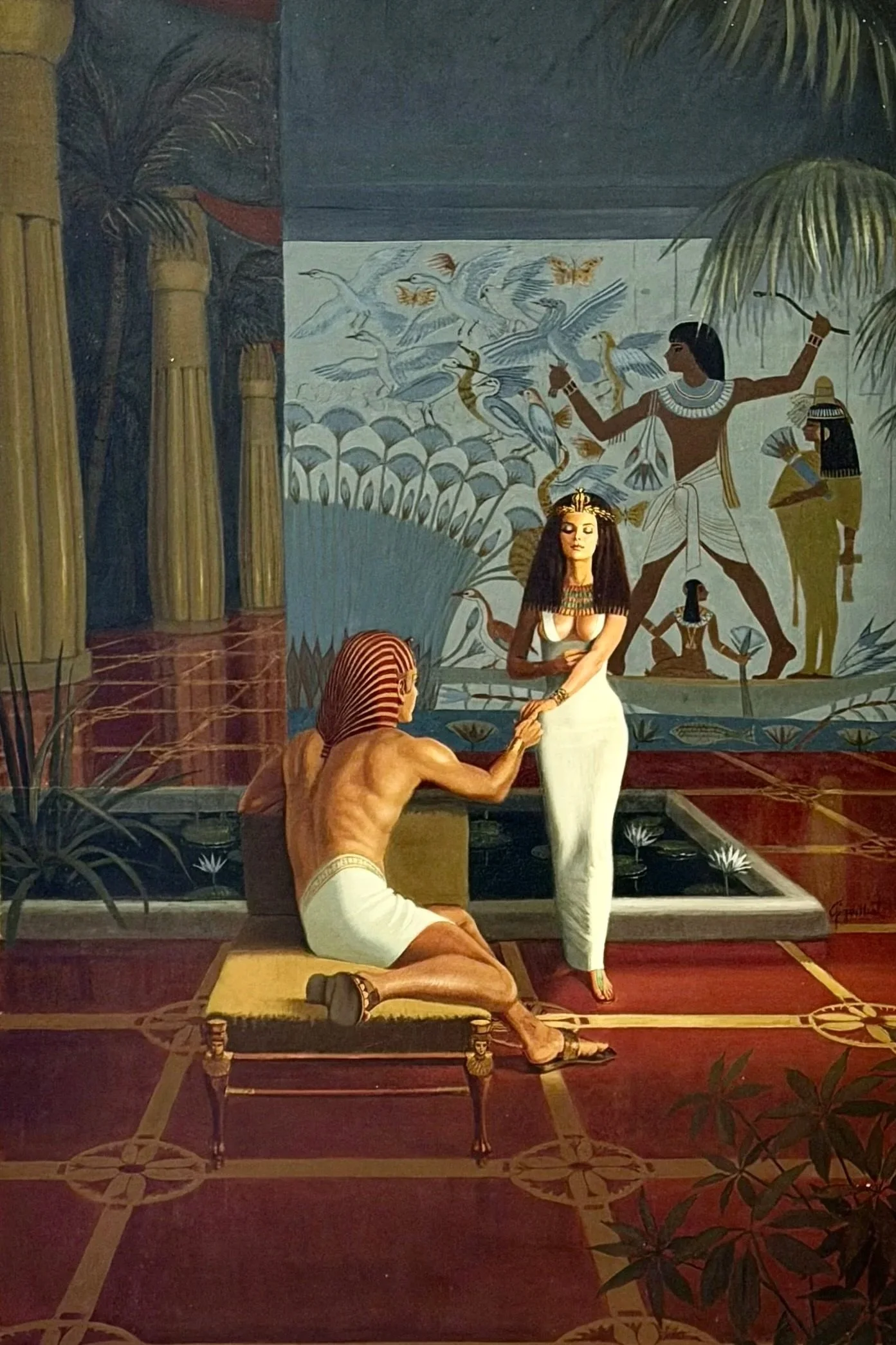
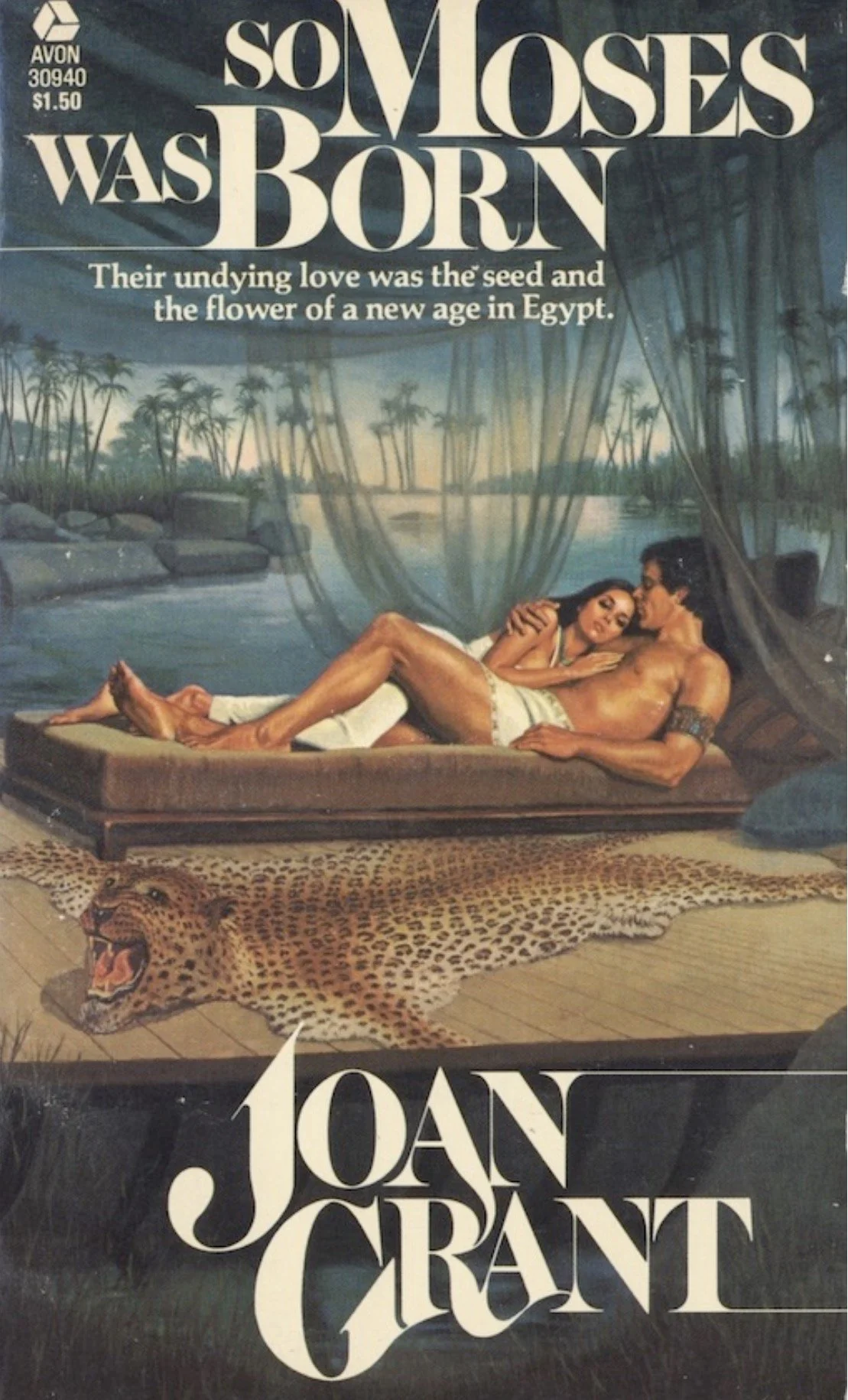
So Moses Was Born by Joan Grant (Avon, 1977, copyright 1952). 'He was the Pharaoh, greatest of all men-- symbol of omnipotence to the people of Egypt-- but even the mighty Ramoses wanted to be loved as man, not as Pharaoh. So he indulged his fiery passions with 28 virgin concubines, until, as the surging Nile was rising, fate brought him the love of a common Hebrew girl, a love that began in innocence and swelled to ecstasy. And in the shadow of a coiled golden cobra, their child was born, one whose name would ring in the hearts of man long after all the false temples had turned to sand...'
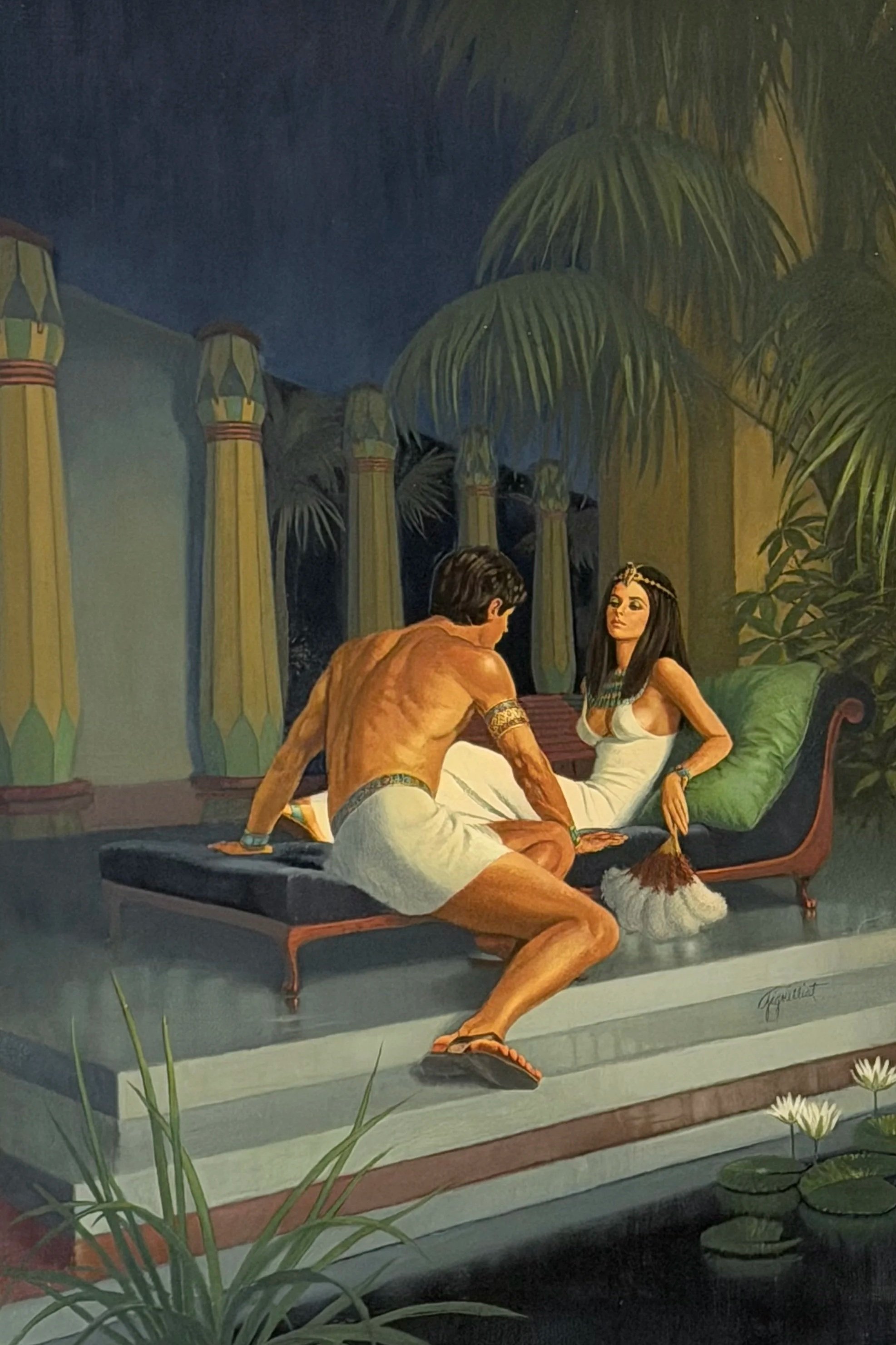
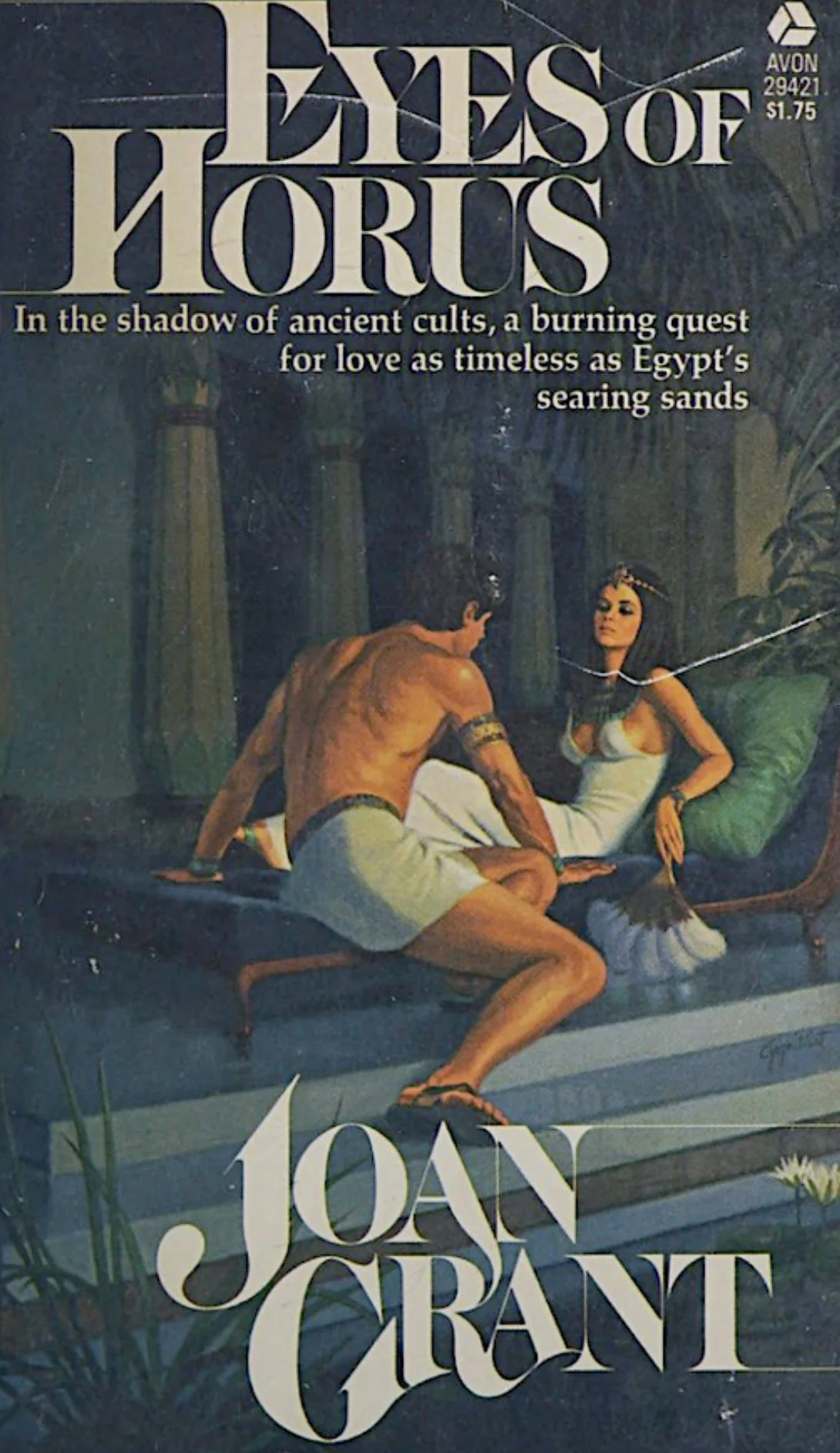
Eyes of Horus by Joan Grant (Avon, 1977, copyright 1942). 'Stronger than the ancient gods of Egypt were the living consorts of darkness, who made themselves supreme in the strength of their whip-men... and slaked their every base desire with strange concealed rites no mortal passion dared oppose. Yet in one pure, immortal passion there throbbed the power the gods had surrendered... The passion of two who had loved in far dead centuries and now risked all, reborn, to renew their torrid bonds.'
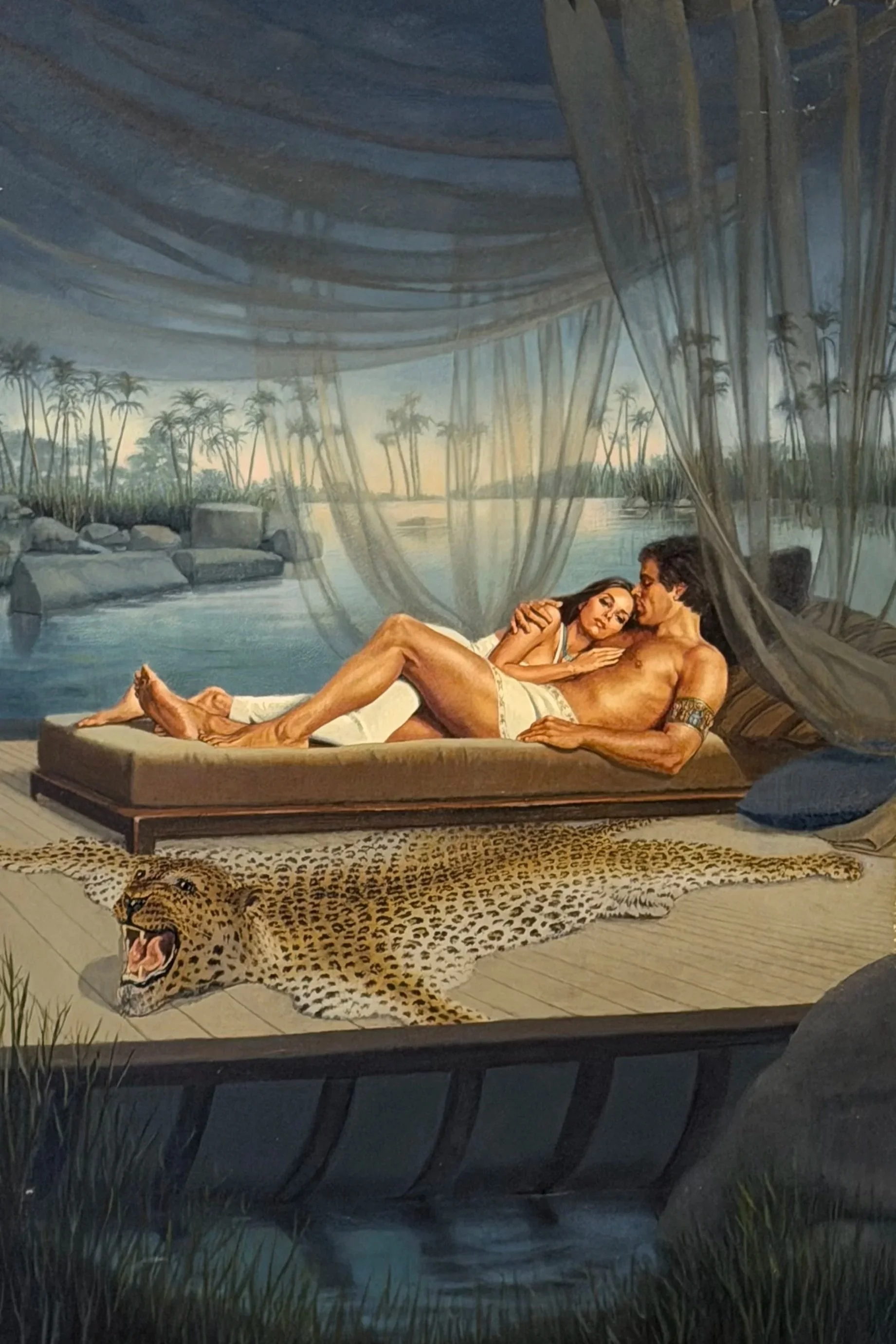
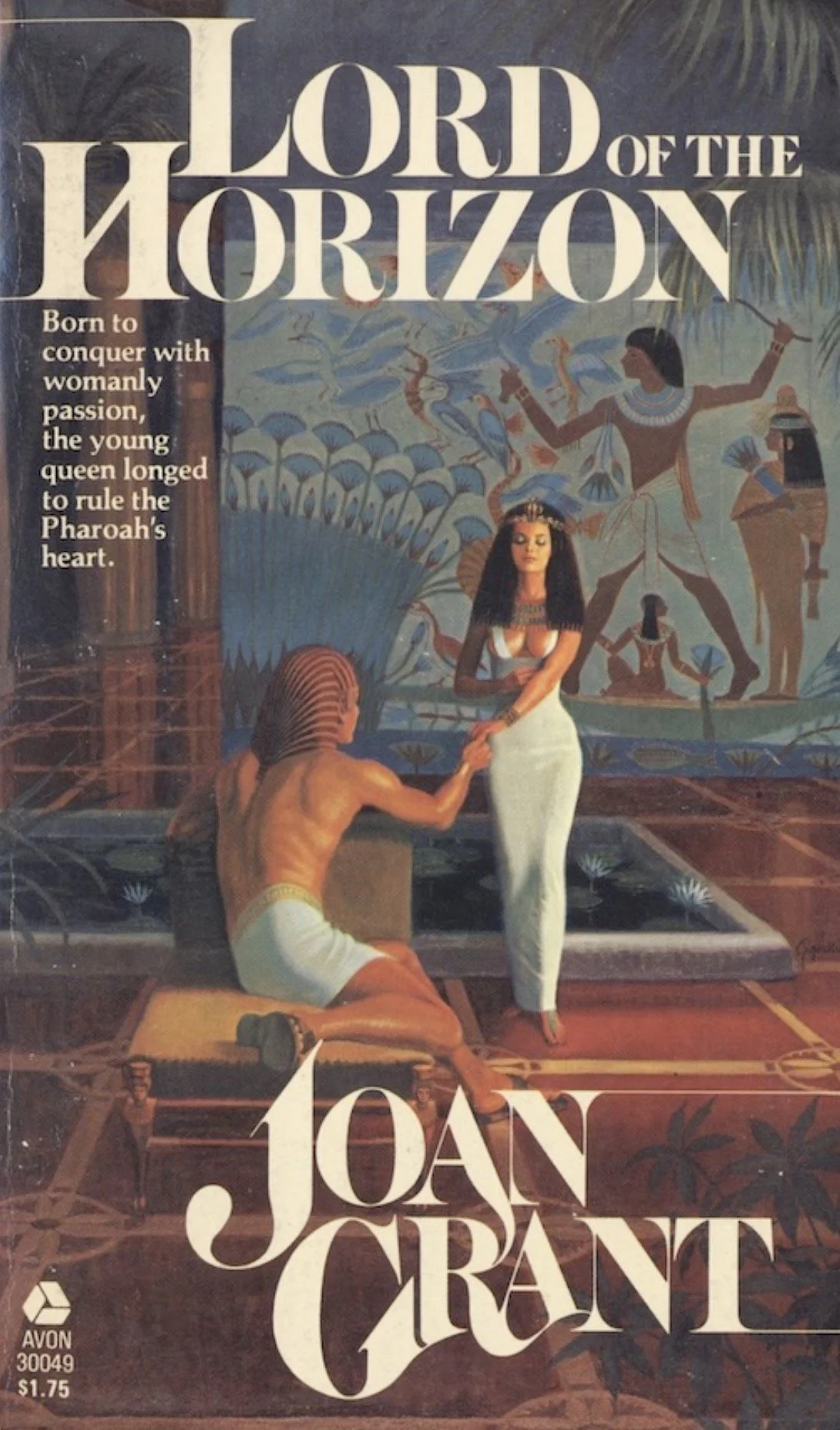
Lord of the Horizon by Joan Grant (Avon, 1977, copyright 1944). 'In a land still veiled by the darkness of godless depravity, the young princess was to be the Pharaoh's bride, and to bear the son who would light the way to Egypt's rebirth. Yet her heartless mother had taught her nothing of womanhood, but only of the ways that love could be twisted, and power stolen for personal glory. When at last the Pharaoh came to this bride in the soft silence of the night, it was as though a curse had descended on their embrace. Nor could he stir the fires imprisoned in her soul, until that curse was broken-- when at last, impassioned lovers, they would wake to the radiant dawn of Egypt's new age.'
Details Worth Noticing:
Across these three Joan Grant covers, Elaine builds a richly imagined world of ancient Egypt and lets the emotional focus deepen from painting to painting. In So Moses Was Born, the couple’s encounter unfolds within a grand, carefully ordered setting. The painted wall, columns, patterned floor, and water garden give the scene the scale of a historical tableau, while the gesture between the kneeling man and standing woman brings the story into intimate focus.
In Eyes of Horus, Elaine draws us closer. The couple sits together beside the water, their attention held between them; palms and columns frame the scene, and the cooler palette gives it a quieter, more private mood. By Lord of the Horizon, the pair reclines in a secluded riverside pavilion. Gauzy curtains, the fading light, and the leopard skin beneath them create a sensual atmosphere, while the open view across the Nile makes the setting feel expansive and alive.
Look closely and the settings do more than establish place: they shape the mood of each image. Elaine’s architectural details, costumes, plants, and water create a convincing visual world, while the changing distance between the figures carries the eye from formal encounter to private closeness.